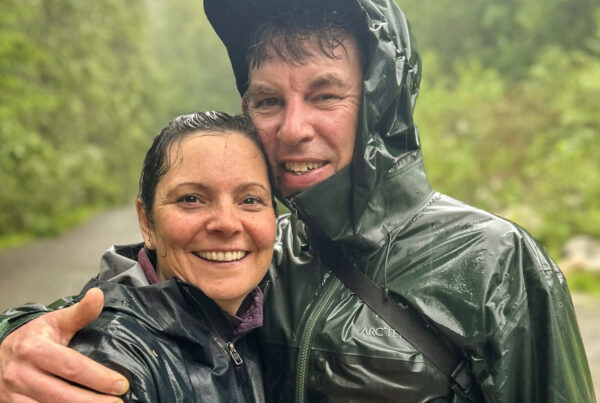
Before the possibility of becoming a therapist ever occurred to me, my wife and I decided to try couples counselling. It came at a time when we were struggling to understand each other’s perspective, and this was causing a lot of pain for us, individually and collectively.
While it’s hard to say with total certainty that couples therapy saved our marriage, it’s also hard to imagine how we would’ve got through that time without it.
From my perspective, I found it particularly helpful that our therapist was able to create a space where it was safe to express things that were hard to express at home. We were fortunate that overall our relationship was in a good place, we just had a tendency to hit some roadblocks on certain topics and these roadblocks put us out of sync and prevented the kind of deep connection that partner relationships rely on.
That experience—of being stuck and then finding a way forward—is why I do this work. When couples come to me, I recognize the courage it takes just to show up. Here’s what you can typically expect from the process.
How couples counselling works
Couples counselling is very different from individual therapy in one important way: the relationship is the client, rather than the individual. My role is to advocate on behalf of the relationship itself, rather than one partner or the other.
There’s one crucial piece of information I need right from the outset: are we here to save the relationship, or to figure out how to separate safely? I need to know if both partners are committed to the future of this relationship. If there’s doubt on either side, we need to have a very honest and open conversation about the source of that doubt and what it will take to get a full commitment from both sides.
You can see that right from the start we’re getting into some deep work, and this is where my role as the therapist really comes into its own. I need to be a calm, solid, non-judgmental presence for my clients as they navigate these deep waters. I need to make sure both parties feel safe.
At the highest level, couples counselling helps partners better understand how their relationship functions and identify patterns that contribute to ongoing difficulties. Practically speaking, my role is to facilitate conversations that allow each partner to express their innermost thoughts and feelings. More importantly, I help them listen deeply to one another. This can be the most important change in the dynamic. When we listen in order to understand rather than just respond, everything shifts.
What happens in the first couples counselling session?
We’ll start by discussing what brought you to therapy. I want to understand the nature of the conflict, who else is affected (children, for example), and get a sense of the current state of the relationship.
Once I have that picture, we can go deeper—talking about the context surrounding the relationship (living arrangements, wider family dynamics) and the history of the relationship itself. Often the dynamics that are problematic right now are rooted in historical events. We’ll also establish some ground rules for sessions, such as how we’ll manage interruptions or escalation.
I like to make it clear that I am not an investigator or a referee. I’m not interested in who is right and who is wrong.
This first session isn’t intended to resolve major issues. Its purpose is to establish a shared understanding of the problem and determine whether couples counselling is an appropriate approach.
What couples work on in counselling
The content of couples counselling depends on each couple’s needs, but common areas include communication patterns, conflict management, emotional connection, and trust.
Some couples work on frequent arguments or cycles of escalation. Others focus on emotional withdrawal, resentment, or breaches of trust. In my experience, most couples aren’t arguing about what they think they’re arguing about—the conflict over who does the dishes is rarely about the dishes.
Counselling aims to identify how these issues are maintained through interaction patterns rather than addressing individual behavior in isolation. Change typically begins with increased awareness before it leads to behavioral shifts.
Individual sessions
My preference is to work only with both partners in the room. I find it works better when we’re all working with the same information. Some therapists include individual sessions to support personal reflection or gather additional context, but that’s not my usual approach.
How long does couples counselling take?
There’s no fixed timeline. Some couples find clarity in 6-8 sessions. Others need longer to shift patterns that have been building for years. Progress is reviewed periodically, and the duration is adjusted accordingly.
My wife and I still attend sporadically when we hit one of our roadblocks. Therapy isn’t just for crisis—it’s also for maintenance.
When couples counselling may be helpful
Couples counselling may be appropriate when:
-
- Conversations frequently escalate or shut down
- The same conflicts recur without resolution
- Emotional closeness has decreased
- Trust has been affected
- External stressors are impacting the relationship
- You want support strengthening your relationship
Counselling may also help couples clarify next steps when uncertainty about the relationship is present.
Couples counselling in Vancouver
I offer couples counselling in Vancouver, both in person and online. My approach is rooted in my own experience navigating relationship challenges and my training in understanding how relationships work—and how they get stuck.
When selecting a therapist, it’s worth considering their experience with relationship concerns, their therapeutic approach, and whether their style feels like a good fit for you as a couple.
Final Thoughts
Couples therapy isn’t about fixing what’s broken—it’s about understanding what’s happening and finding ways to reconnect. If you’re feeling stuck, distant, or caught in the same arguments, it might be worth reaching out. Sometimes just having a conversation about whether therapy makes sense is the first step forward.
Reach out today and schedule a free 20 minute consultation.