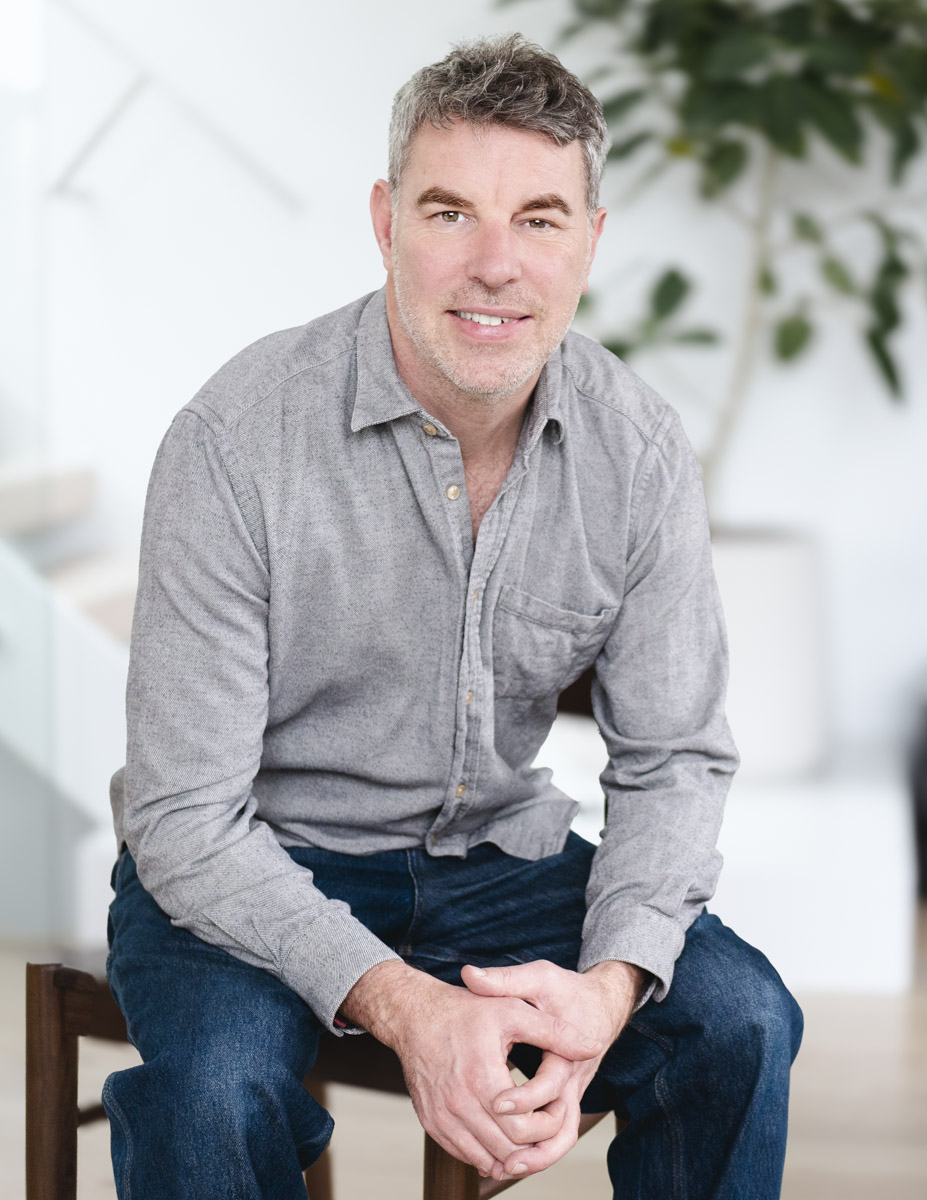
Justin Morrison, RCC

I came to this work the long way around.

I was raised in Ireland and studied to become an engineer — first aeronautical, then software — and spent a number of years inside the corporate world. The work asked me to be a smaller, less full version of myself, and I came to realize I didn’t want to spend my life that way. Eventually, I left Ireland and came to Canada to study photography. I spent the next chapter of my life as a freelance photographer and filmmaker, paying close attention to people and to light.

Therapy came after that. I trained for my Masters in Counselling at City University here in Vancouver, returning to school as a middle-aged student. The most important thing I learned wasn’t a technique or a model. It was that the relationship between therapist and client matters more than almost anything else. Decades of research point to this, but it’s the kind of finding that’s easy to nod at and then forget. I haven’t forgotten it. It’s the centre of how I work.

Growing up in Ireland, I found myself in a culture that didn’t make much room for feelings or vulnerability. Making sense of my own inner life took time, curiosity, and the right relationships. That experience shapes how I sit with clients — without judgment, without performance, and with real respect for how hard it can be to begin.

What this looks like in practice is probably simpler than you’d expect. I don’t take notes during sessions. I want to be fully present with you, not half-watching my pen. I try to speak less than my instinct tells me to, because I’ve learned that the silences are often where something real happens. I aim to be the same person in the room that I am everywhere else — warm, curious, sometimes funny, occasionally direct. The Irish inheritance shows up there.

I know what it’s like to struggle inside while telling the world that everything’s fine. I also know that change is possible.

I work from Carl Rogers’s premise that real change happens when a person feels deeply understood, accepted as they are, and met by someone genuinely themselves. I draw on Acceptance and Commitment Therapy and Existential approaches when they’re useful — and they often are — but the relationship is the work. Everything else is a tool.

That includes the harder moments. If you ever feel frustrated with me, or misunderstood, or like something I said landed wrong, please tell me. Most people are conditioned to smooth those moments over, and I think that’s a missed opportunity. The places where the relationship gets bumpy are often the places where the most important work is waiting.

Change in therapy is rarely linear. People often feel worse before they feel better. Things shift in ways that aren’t visible for weeks or months, and then suddenly something feels different. I tell new clients to expect this — not as a discouragement, but as a way of trusting the process when it doesn’t feel like progress.

I see couples and individuals from my East Van office and online across British Columbia. I prefer in-person when possible — there’s something about being in the same room that helps the work — but I’ve seen clients do meaningful work virtually, and I offer sessions across BC for anyone who can’t easily make it to East Van. If you’d like to know more about how I work specifically with each, you can read about couples therapy or individual therapy.

When I’m not working, I’m often listening to music. It’s a salve to my soul.

Ready to take the first step?

I offer a free 20-minute consultation by phone or video. It’s a low-pressure way to ask questions, get a feel for whether we’d work well together, and decide what feels right from there. No commitment, no pitch.